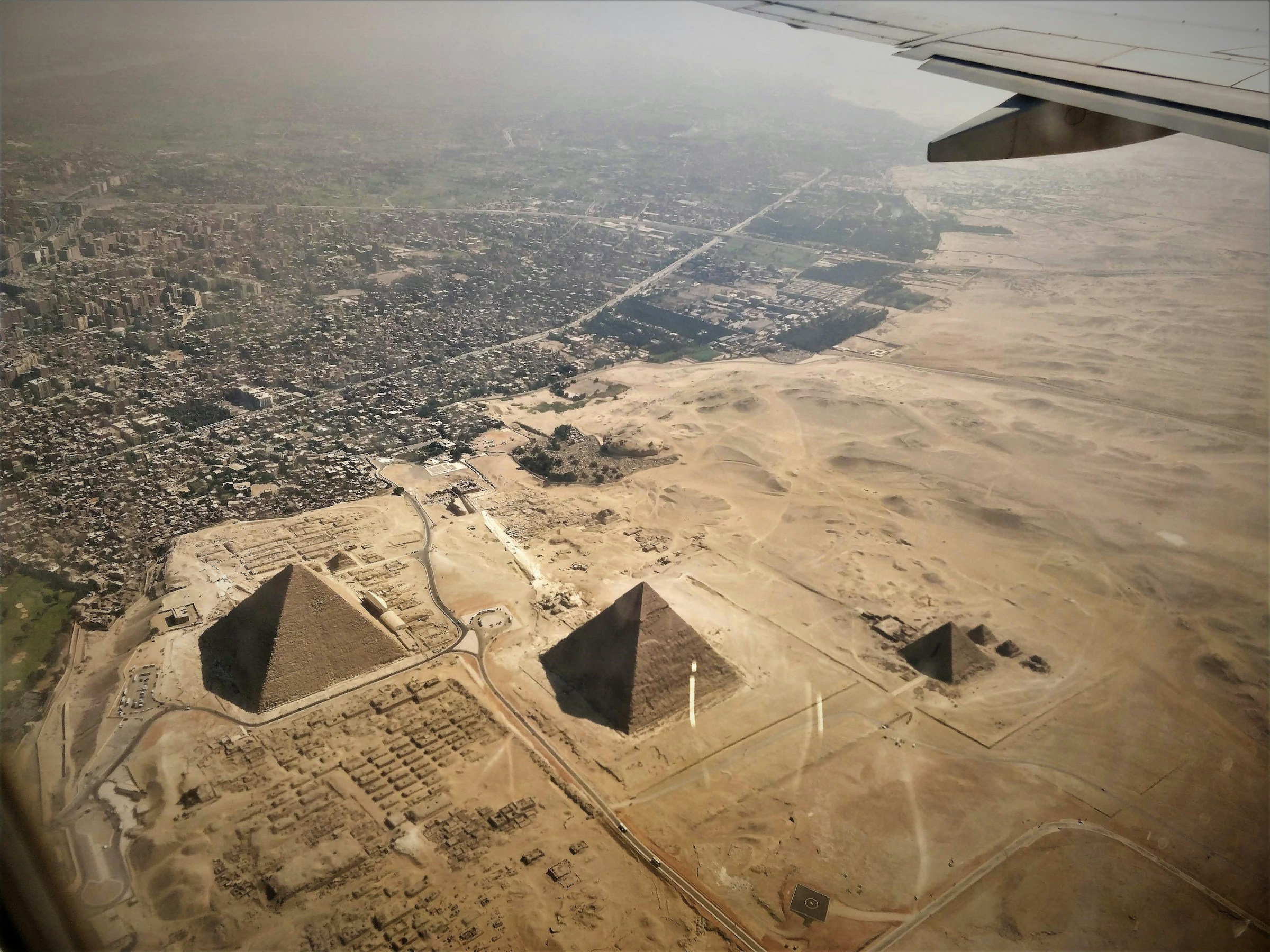
The three pyramids of Giza seen from the air, ranged along the edge of the desert above Cairo

EXPERT-LED. SMALL GROUPS. ANCIENT EGYPT.

Four and a half thousand years
is worth an unhurried look.

Small-group expeditions through the pyramid fields of Egypt, in the company of working Egyptologists.

THE OLDEST ARCHITECTURE STILL STANDINGHow we travel GIZA · THE WESTERN DESERT EDGE

TRAVEL THAT EXPECTS YOUR ATTENTION

Not a photograph. A place you stood.

Most people see the Giza plateau for ninety minutes, from a bus, at the hottest hour of the day. It is possible to do this very differently: earlier, slower, in a group of a dozen, with someone beside you who has worked on these sites and can tell you what is known from what is guessed.

We build expeditions around the pyramid fields of Egypt — Giza, Saqqara, Dahshur — and the monuments of the Nile beyond them, along with occasional comparative departures to the pyramids of Mesoamerica and Sudan. Tell us how long you have and what you want to understand, and we will shape the days around that.

Tell us what you want to understand
EGYPTOLOGIST-LED DAYSTHE THEBAN WEST BANKTHE NILE PASSAGEPYRAMIDS OF THE WORLD

WHERE THE EVIDENCE STANDS

Where would you like to stand?

Begin with a site, or with the way you want to travel.

Khufu, Khafre and Menkaure, built in the third millennium BC and still the reference point for everything that follows.
Djoser’s step pyramid, c. 2650 BC — the first monumental building in Egypt raised in cut stone, and the idea from which the rest grew.

Karnak, the Theban west bank and the rock-cut royal tombs of the New Kingdom, roughly a thousand years after Giza.

Ramesses II’s rock temples, cut c. 1264 BC and lifted stone by stone to higher ground in the 1960s ahead of the Aswan High Dam.

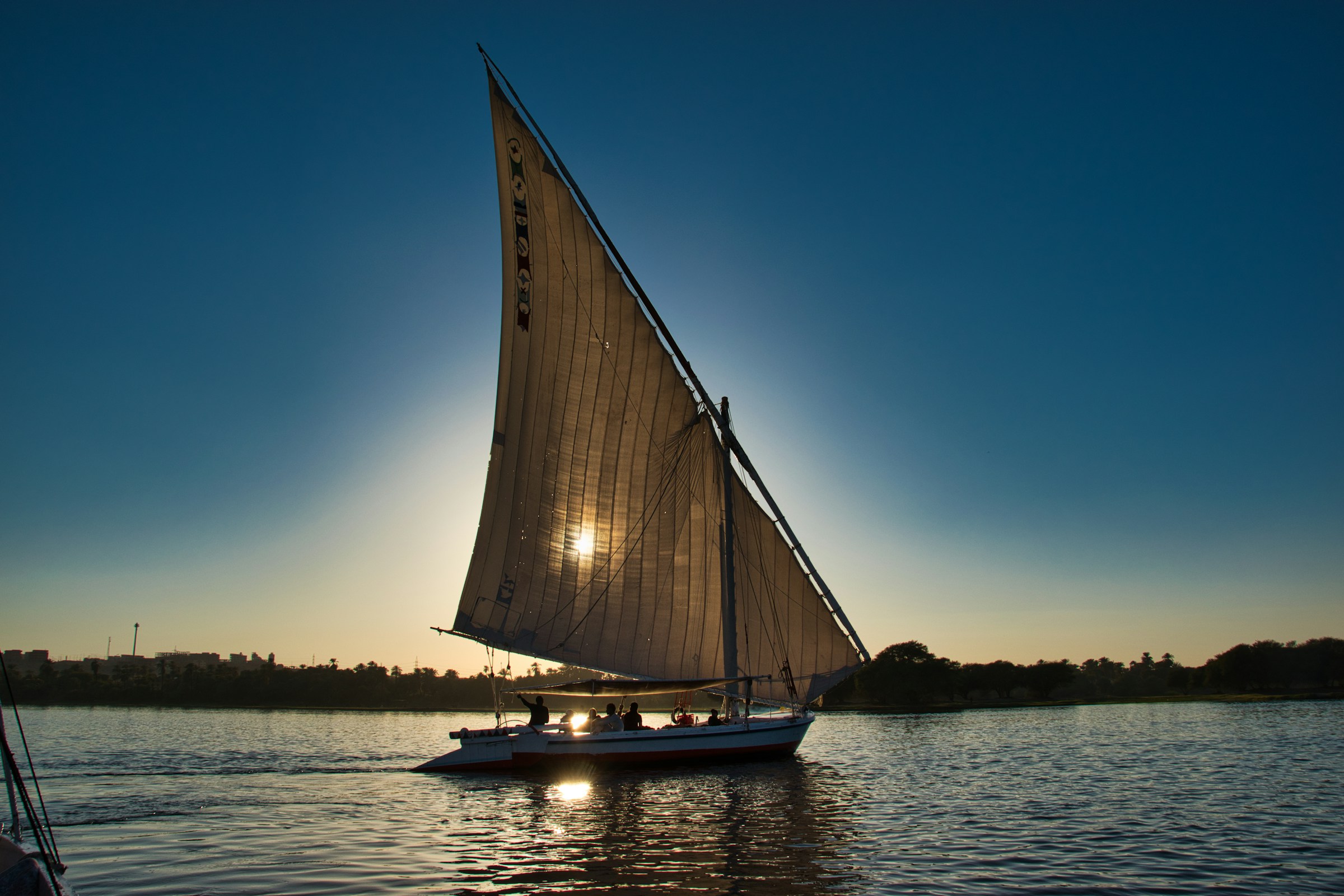
A felucca under sail on the Nile at Aswan, low sun on the water

AN HOUR BEFORE THE COACHES

The stones do not change.
The hour you meet them does.

First light on the plateau, a guide who can read the wall in front of you, and a group small enough to ask a second question.
That is the whole of our method.

See how a day is shaped

FOUR WAYS INTO THE SAME QUESTION

Choose the expedition,
not only the destination.

Some people come for the Old Kingdom pyramid fields, some for the painted tombs of the New Kingdom, some to set Giza beside Tikal and Meroë. Tell us which, and the days are built around it.

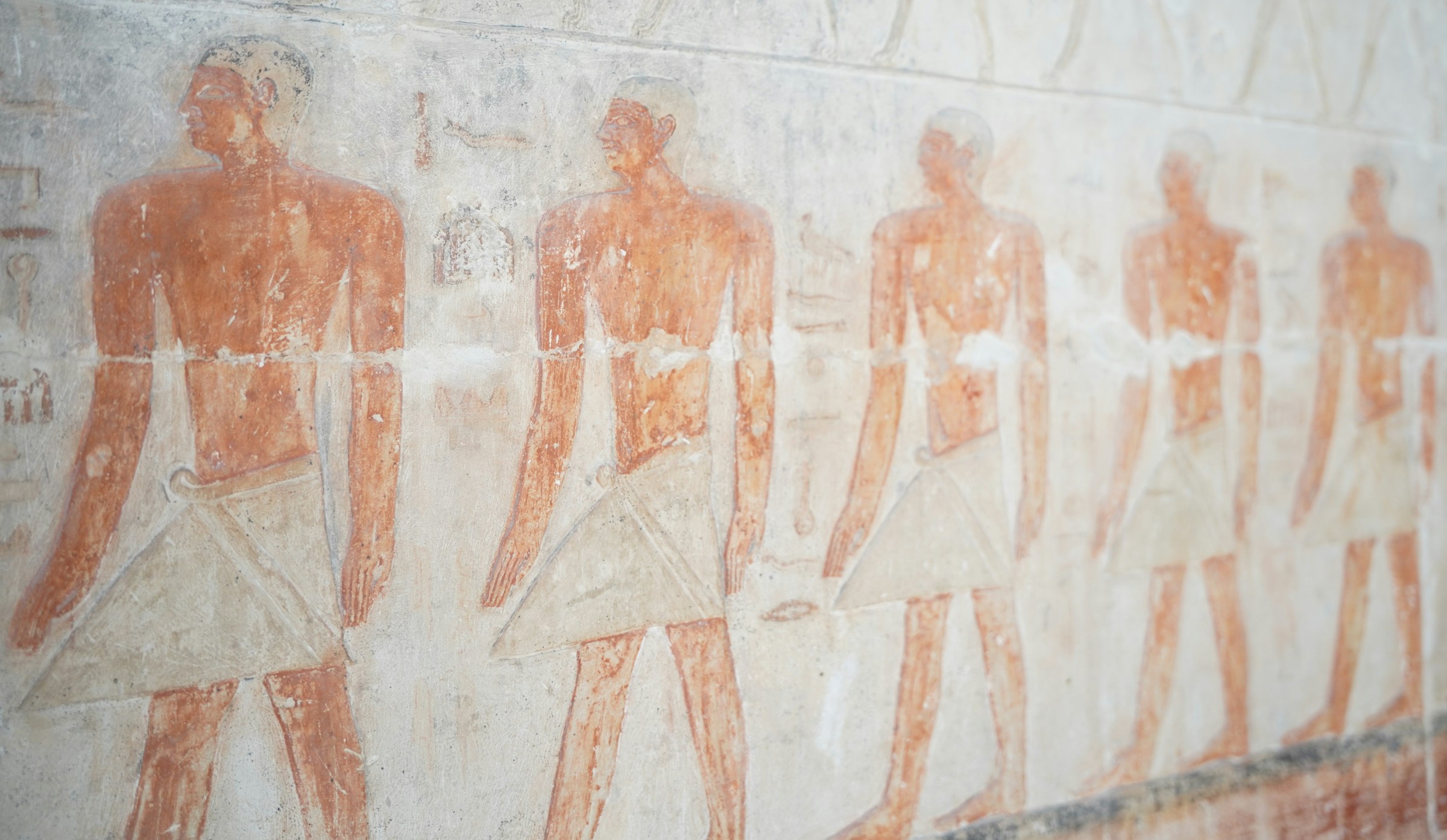
Painted wall figures showing scenes of daily life in the Saqqara necropolis

Egyptologist-led days

Read the stone with someone who reads it.

Giza and Saqqara in the company of a working Egyptologist: what the inscriptions say, what is reconstruction, and where the evidence genuinely runs out.

WHY TRAVEL THIS WAY

Scholarship, at walking pace.

Every departure is accompanied by a working Egyptologist, and every group is kept small enough that the explanation is a conversation rather than a broadcast.

01

Led by working Egyptologists

Every departure travels with a qualified Egyptologist. Not a script read at the coach door — someone who can answer the question you actually asked, and say plainly when the answer is unsettled.

02

Small enough to ask twice

Groups are deliberately small. In a painted tomb corridor or an unlit burial chamber, group size is the difference between hearing an explanation and standing near one.

03

The hours that matter

Opening time at Giza, first light at Dahshur, the Theban west bank before the heat arrives. We plan around when a site is bearable and quiet, and build the rest of the day around that constraint.

Begin a conversation with Nadia

FIELD NOTES

A little context before you go.

Three short pieces on what you will be standing in front of.

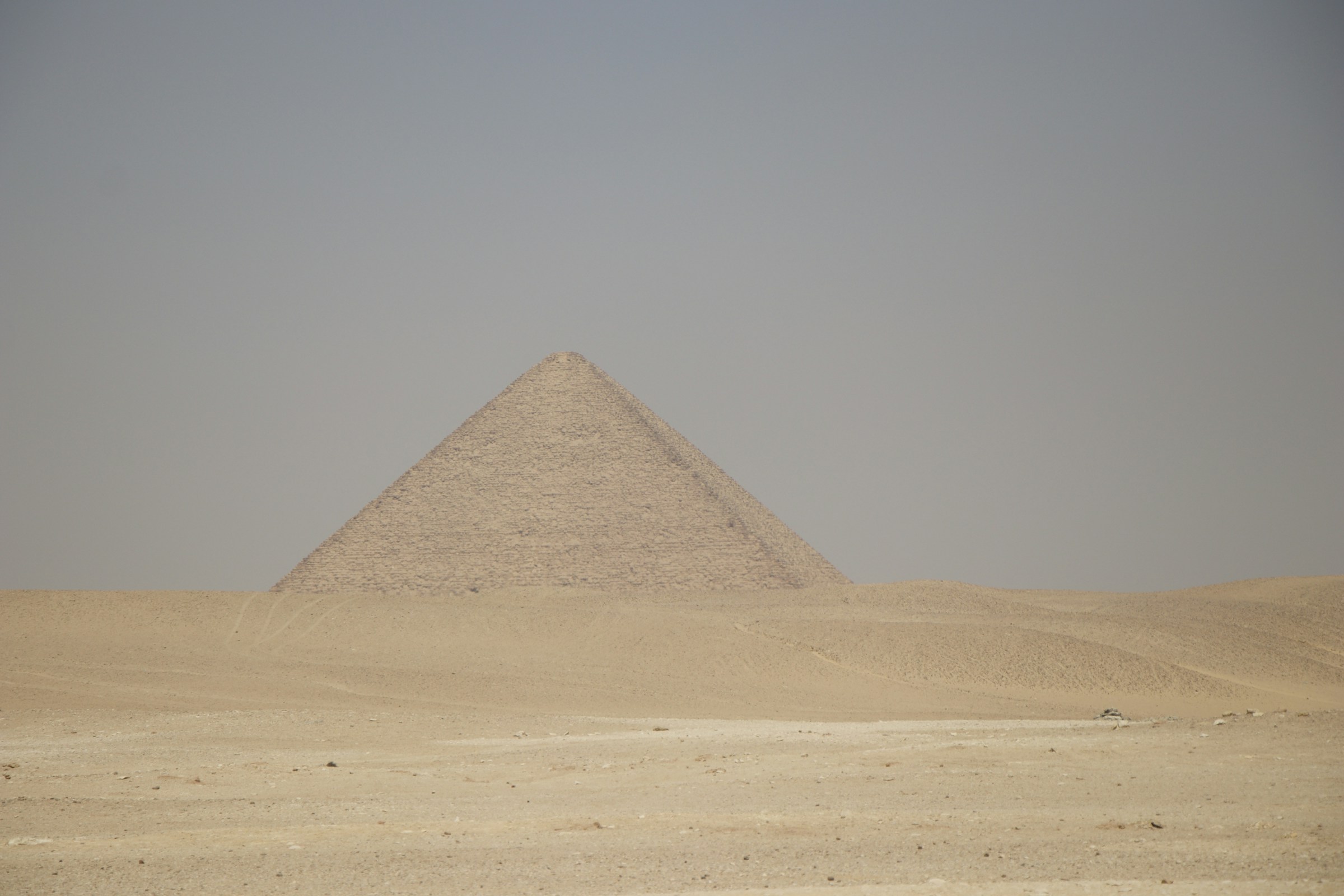
A smooth-sided pyramid standing alone in the desert at Dahshur

THE FIELD

Dahshur, before anyone else arrives.

Two pyramids, one reign, and the moment the shape was solved.

Read the note

Dahshur holds the Bent Pyramid and the Red Pyramid, both raised for Sneferu in the early Fourth Dynasty, c. 2600 BC. The Bent Pyramid changes angle partway up — the slope eases from roughly 54 degrees to 43 — and while the reason is still argued over, the correction is visible from a mile away. The Red Pyramid, built at the gentler angle throughout, is generally taken to be the first successful smooth-sided pyramid in Egypt.

Read in sequence, they are an engineering problem being worked out in public, across a single reign, at a scale nobody had attempted before. Djoser’s stepped monument at Saqqara is the prototype; Dahshur is the correction; Giza is the result.

It is also the quietest of the three fields. A dawn start puts you at the Red Pyramid with the low sun raking the casing and, most mornings, nobody else in the enclosure. We go there first, deliberately, so that Giza arrives in the right order.
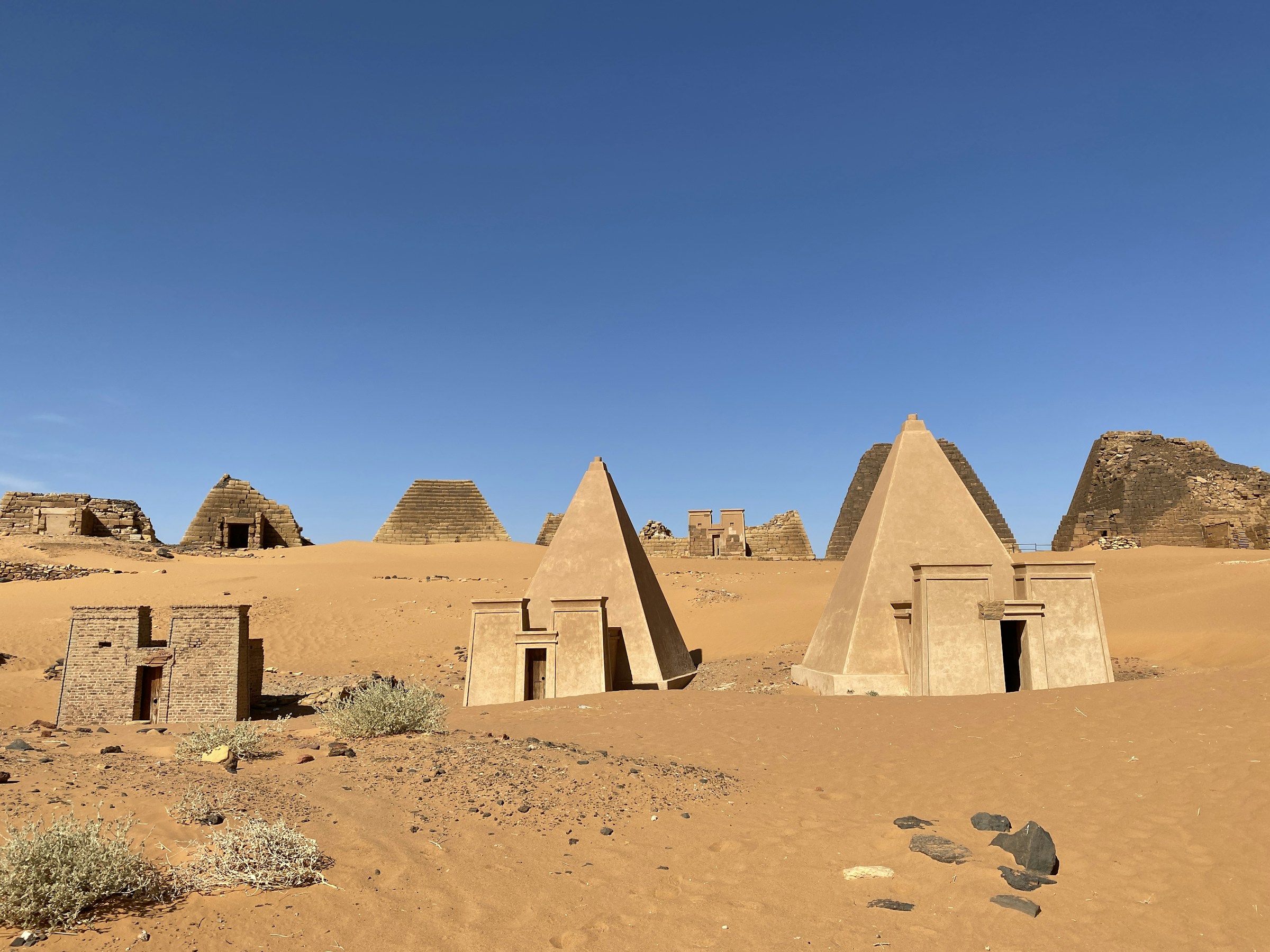
The steep, closely set royal pyramids of Meroë standing in the Sudanese desert

COMPARISONS

Sudan has more pyramids than Egypt.

The royal cemeteries of Kush, and why almost nobody has seen them.

Read the note

Downriver of the Sixth Cataract, the Kingdom of Kush buried its rulers under pyramids for centuries — at Meroë alone, more than two hundred of them, raised from roughly the third century BC into the fourth century AD. They are smaller than the Egyptian pyramids, considerably steeper, and clustered so densely that the cemeteries read as small stone cities.

They are also about two thousand years younger than Giza, which is the point worth holding onto. The form was borrowed from a neighbour and then developed for centuries on its own terms, long after Egypt itself had abandoned it. Kushite rulers had governed Egypt as its Twenty-fifth Dynasty; the architectural debt runs in both directions.

Travel to Sudan depends entirely on conditions on the ground, and we will tell you frankly whether a departure is realistic when you ask. When it is not, the comparison is still worth making in the room: the same idea, a different civilisation, a different millennium.

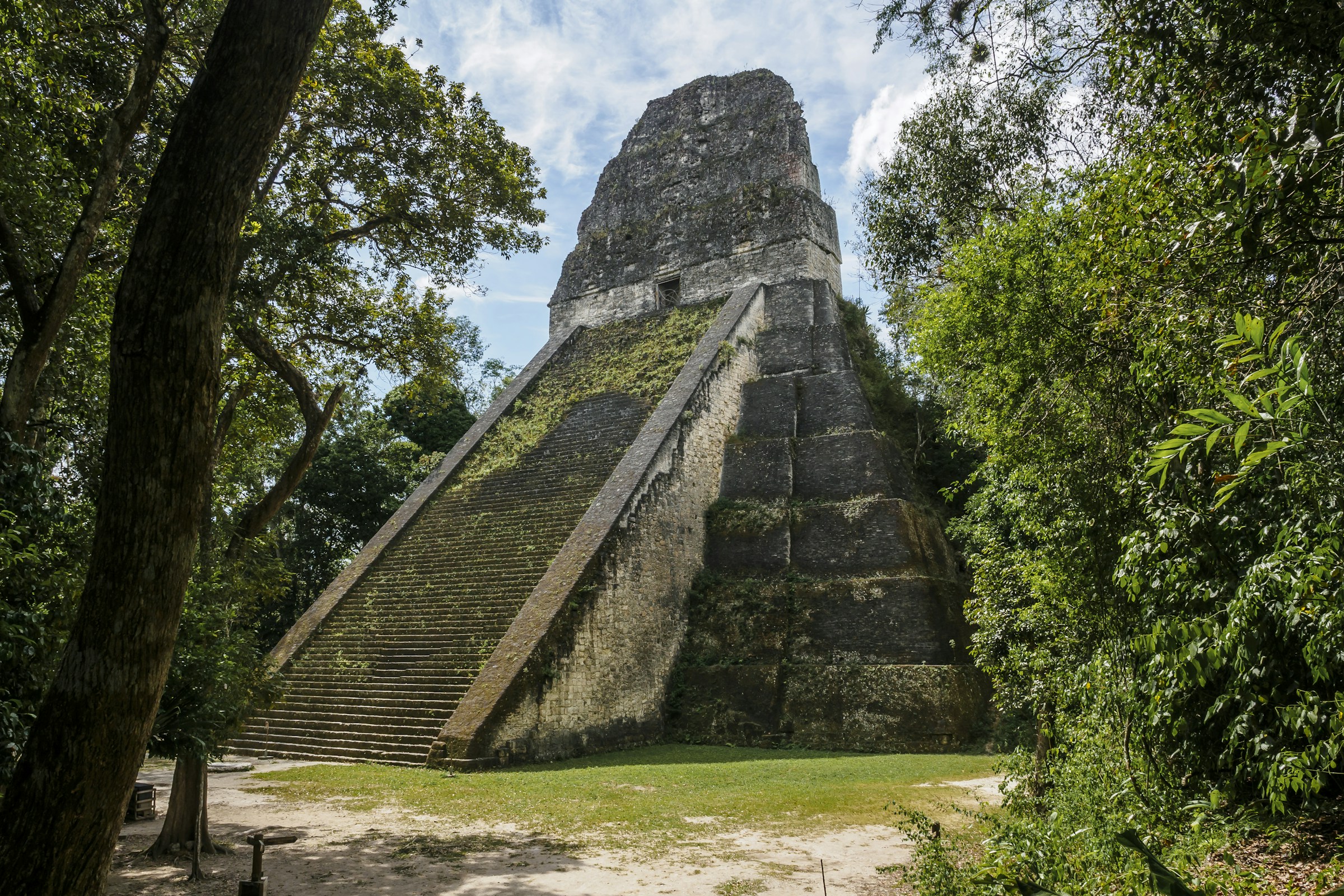
A Maya temple pyramid at Tikal rising above the rainforest canopy in Guatemala

PERSPECTIVE

Why a pyramid, four separate times?

Egypt, Nubia, central Mexico and the Petén rainforest arrived at the same silhouette without conferring.

Read the note

There is no evidence of contact between the builders at Giza and the builders at Teotihuacán or Tikal, and the dates are not close: the Giza pyramids belong to the third millennium BC, Teotihuacán’s great platforms to roughly the first to sixth centuries AD, and Tikal’s temple pyramids to the Maya Classic period, mostly the eighth century AD.

What they share is a problem rather than a plan. If you want great height from stone or rubble without arches or steel, a broad base narrowing upward is the shape that stands. Everything else about them differs: the Mesoamerican structures are platforms built to be climbed and used, with temples on top, while the Egyptian pyramids are sealed tombs meant never to be entered again.

Travelling them as a set makes both halves sharper. You stop reading a pyramid as a single idea that spread, and start reading each one as a separate answer to gravity, labour and the question of what a ruler’s death should look like.

SITES. DATES. GROUP SIZE.

Tell us where you’d like to begin.

A few details, and we’ll shape the rest around them.

Who’s travelling?

Not sure yet? Start with a conversation. We’ll tell you honestly what is realistic for your dates.

BEFORE YOU GO

A few things
worth knowing first.

When is it too hot to travel?

Upper Egypt regularly passes 40°C between June and September, and the open desert sites offer no shade at all. Most people are more comfortable between October and April. Whenever you travel, we start early, break through the middle of the day, and treat the afternoon as optional.

Can everyone go inside a pyramid?

Not comfortably, and it is always optional. Interior passages are steep, narrow and low — parts of the ascent into Khufu are done bent double on a ramp — and they are hot, unventilated and without handrails or lifts. Anyone with limited mobility, claustrophobia, a heart or breathing condition, or a recent injury should plan to skip the interiors. Tell us in advance and we will build an alternative rather than leave you waiting outside.

Can we take photographs?

It depends on the site, and the rules change. Some tombs and chambers prohibit photography entirely, others sell a separate photo ticket at the gate, and flash and tripods are widely restricted. Drones are not permitted without formal authorisation. Your Egyptologist will confirm the current position at each site before you go in.

How far in advance should we enquire?

As early as you can. Group sizes are small, Egyptologist availability is the real constraint, and the cooler months fill first. That said, nothing is committed by enquiring — an early conversation is mostly about whether the dates and the itinerary can be made to agree.

Can we book on this site?

No. Nothing here is a reservation and no availability is held. The planner prepares an email enquiry for you to review and send; from there we discuss dates, group size and cost, and anything that is confirmed is confirmed in writing, separately.

Who leads the expeditions?

Working Egyptologists — people whose professional field this is, rather than general guides. We will tell you who is scheduled to lead your departure and what their background is before you commit to anything.

BEFORE WE PLAN ANYTHING

A good place
to begin.

GizaEgyptologist-led days2 adults · 0 students

We’ll prepare an email for you to review and send to Nadia. These details stay in this page until you choose to open your email app.